
1
Customization
Importance of customizations in their management tools and visualizations for fund’s performance reports
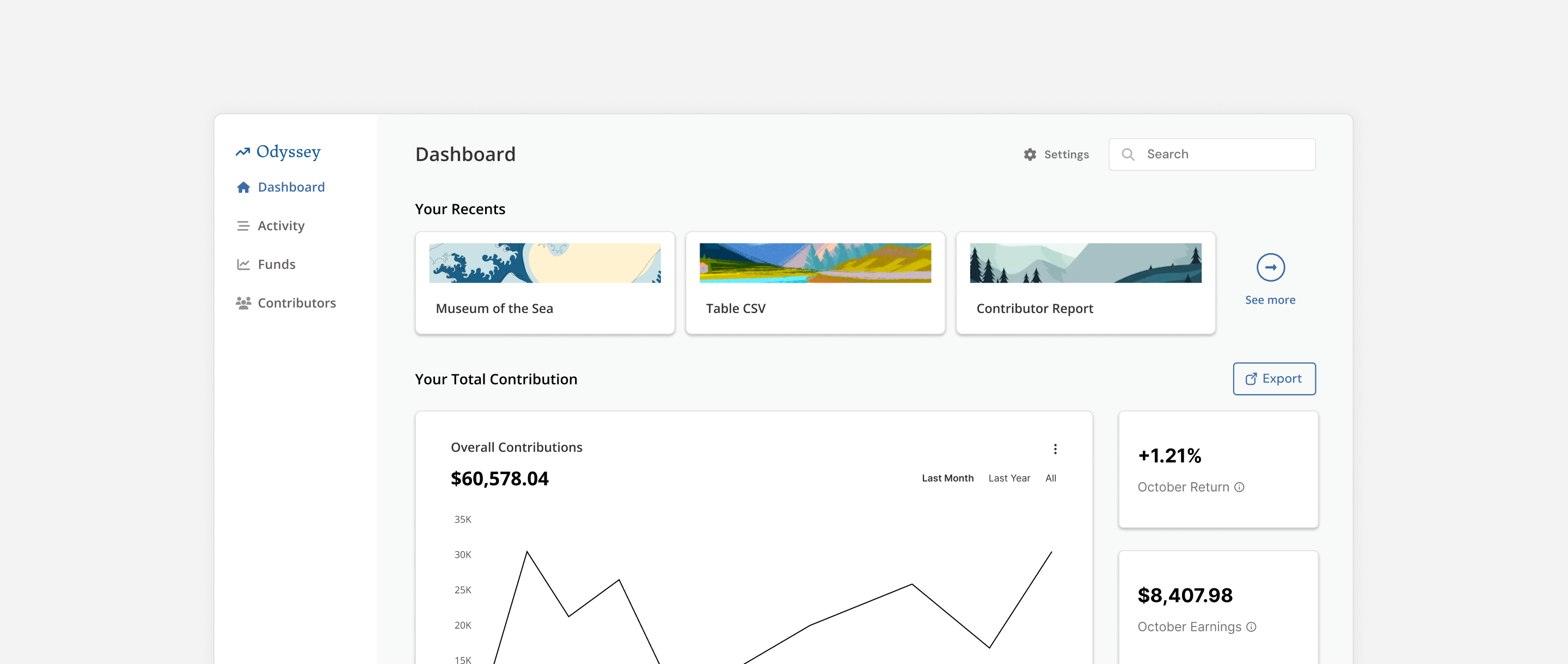
Web Application
In order for non-profit organizations to manage finances easily, I created a secure, open source endowment and customer management application to not only manage endowment gifts but also stay connected with donors.
Currently, there are expensive software solutions for organizations who receive $100 Million+ in endowments, leaving smaller-scale organizations who generate around $1 Million+ to deal with tools that are tedious and costly.
 CONTEXT
Odyssey Fund is a Hack4Impact product designed from concept to delivery, aiming to provide an open source and accessible platform for thousands of non-profit organizations to manage $1 million+ endowments and donor relations seamlessly. Brought to us by our client David Strip, I worked with two other designers to learn about the market is lacking and designed over 8+ complete flows over the course of two semesters. Odyssey has been built by the developer team at Hack4Impact and currently in deployment.
FINAL PROTOTYPE
Unlike our competitors that solely focus on endowment management, Odyssey offers a space to manage finances with different managerial access and ability to connect with donors directly within the platform.
So, how did we get all the way here after two semesters of constant designing, revising, and testing?
USER RESEARCH
I studied competitor endowment management platforms and CRM (customer relationship management) platforms through guided demos and free trials to establish their purpose, strengths, and weaknesses.
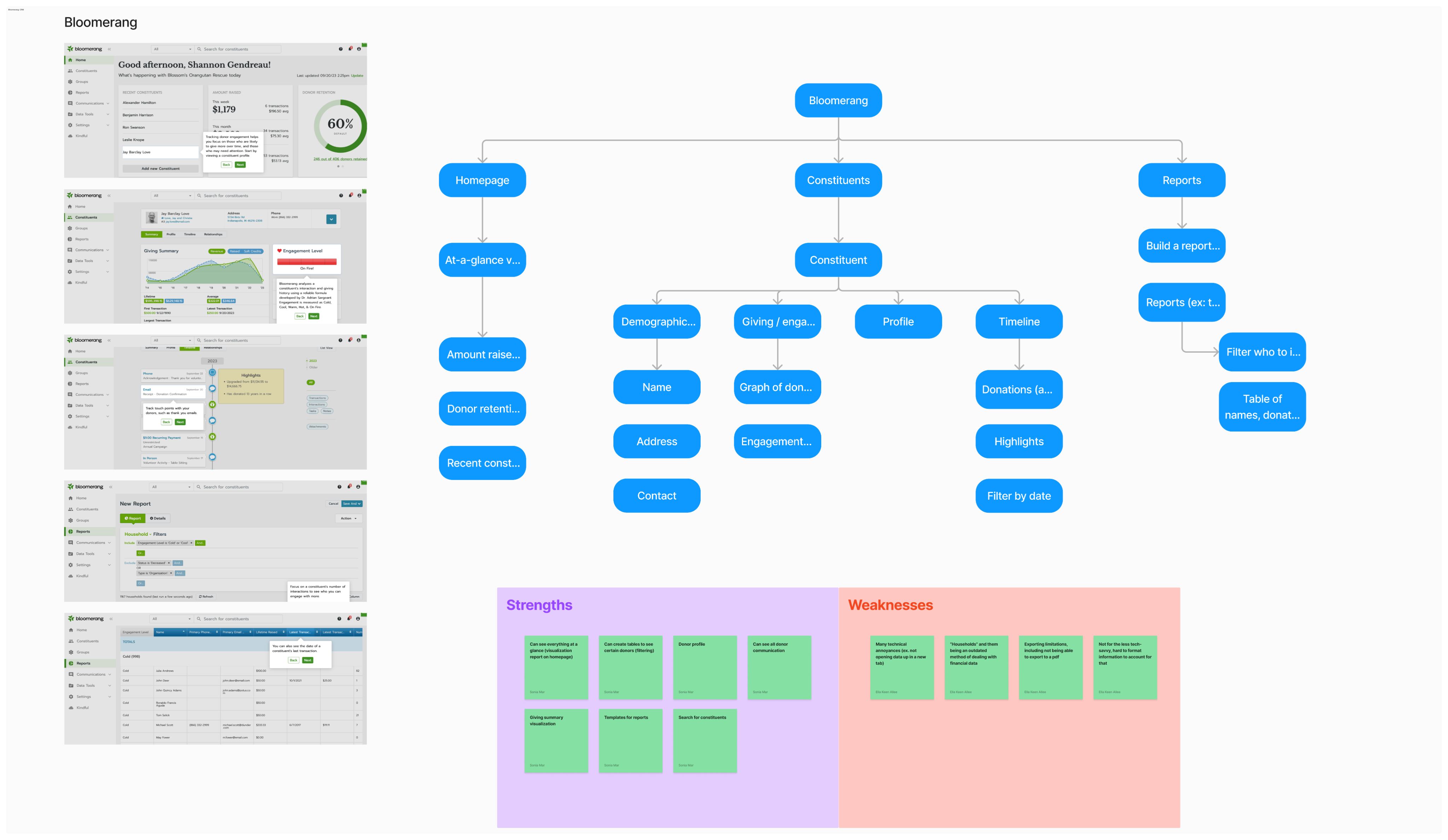
I found that our competitors either specialized in endowments or in customer relations, but there was no perfect product to let users do both.
I conducted 6 interviews with endowment managers and donor managers, those ranging from small grassroots organizations to large, $100M+ endowment organizations. I organized the team’s insights into the following affinity diagram:
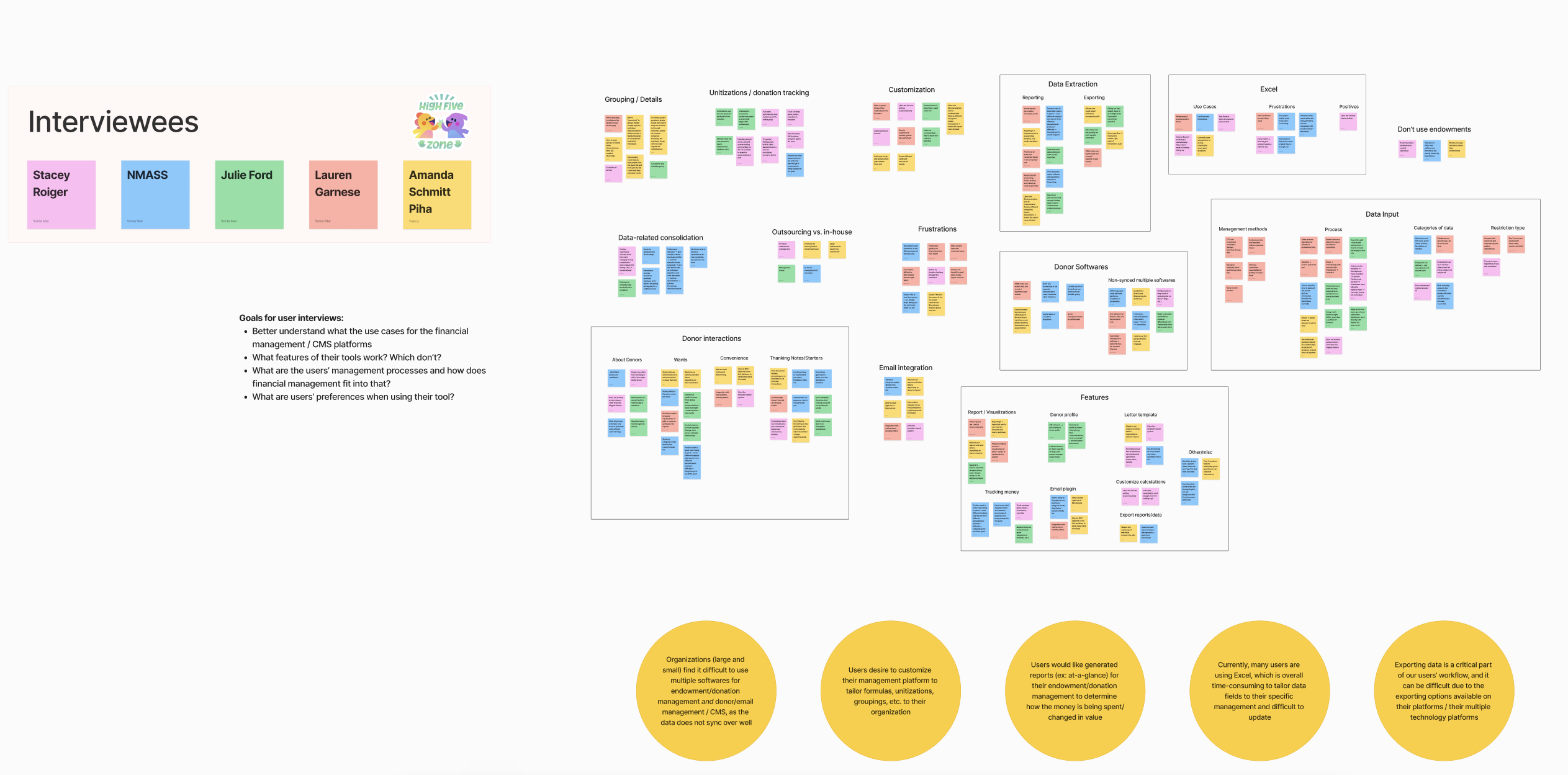
There were three major points that I gathered from user research.
Importance of customizations in their management tools and visualizations for fund’s performance reports
Managing donors and finances are frustrating to do separately and often donations are also accepted by endowment orgs
Users use multiple softwares to manage their finances, making it laborious to update and sync information
ARCHITECTURE
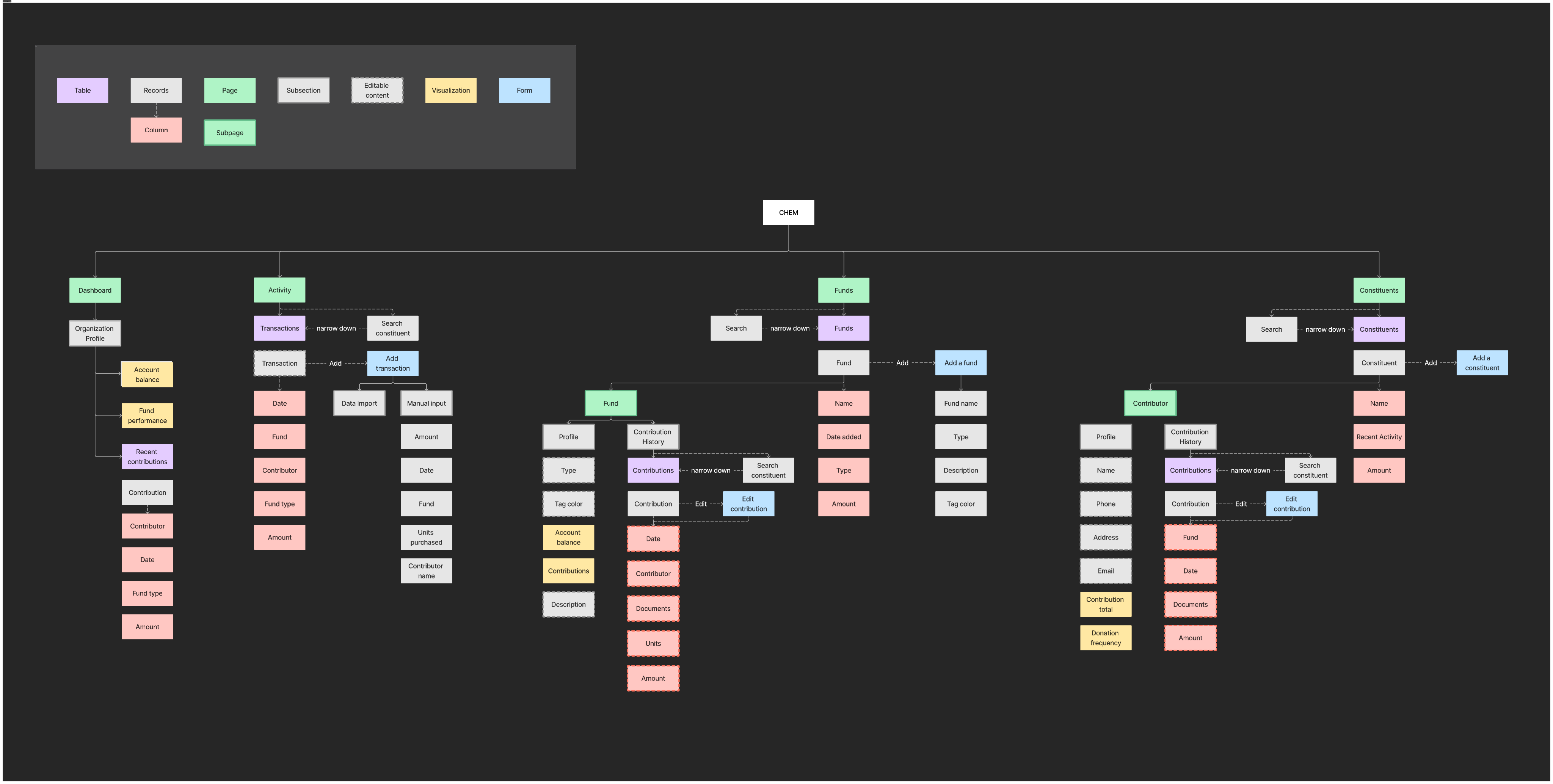
Because we had so many insights, I first divided the features into MVP (minimum viable product / originally on our PRD) features and then mapped those features into an information architecture that has been frequently updated.
 IDEATION
We explored some ideas in sketches, but tried to speed through this part of the process because we wanted to spend more time iterating in mid fidelities. Here are some of my personal sketches for our pages:
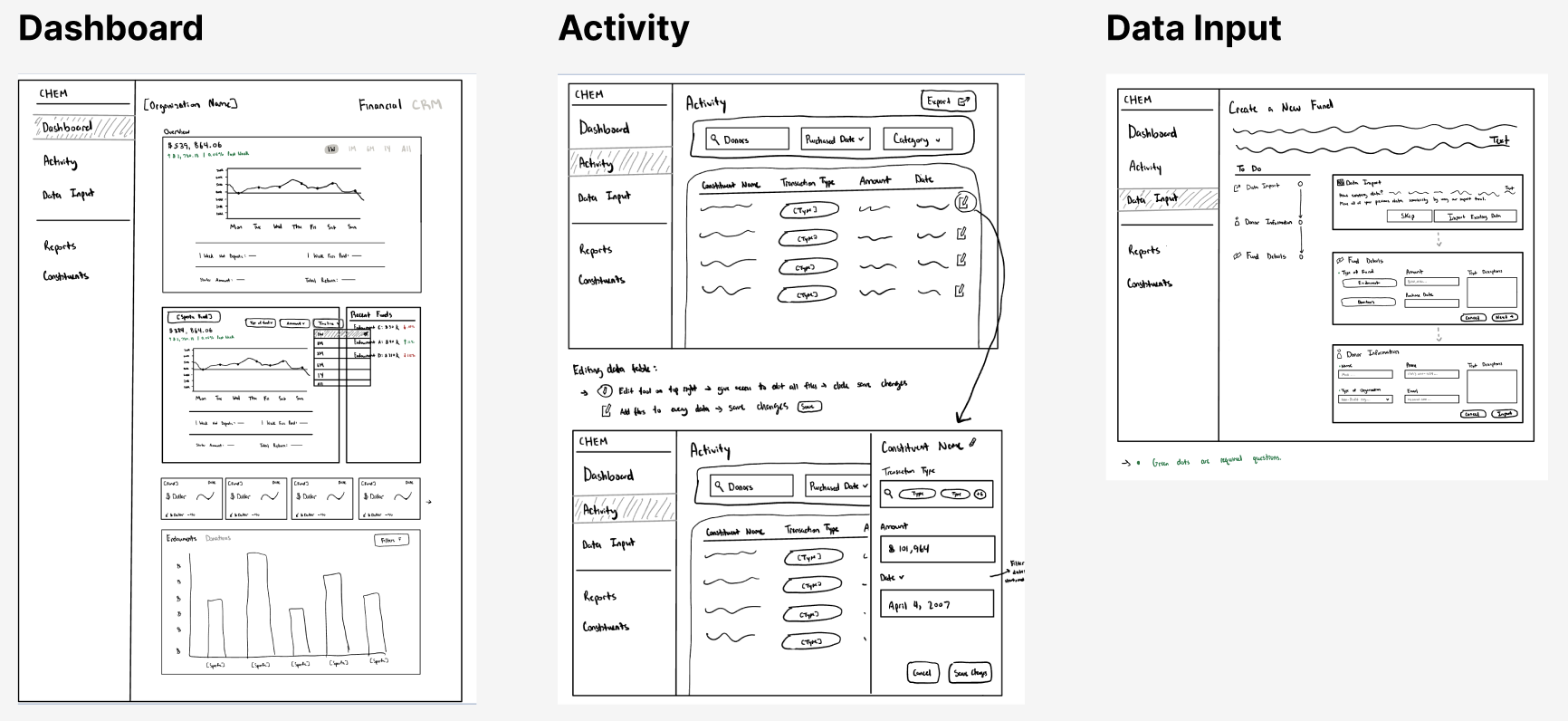
Dashboard provides an overview of users’ fund portfolio and contributors. Activity contains filters and a data table to show all the recent transactions that have been made.
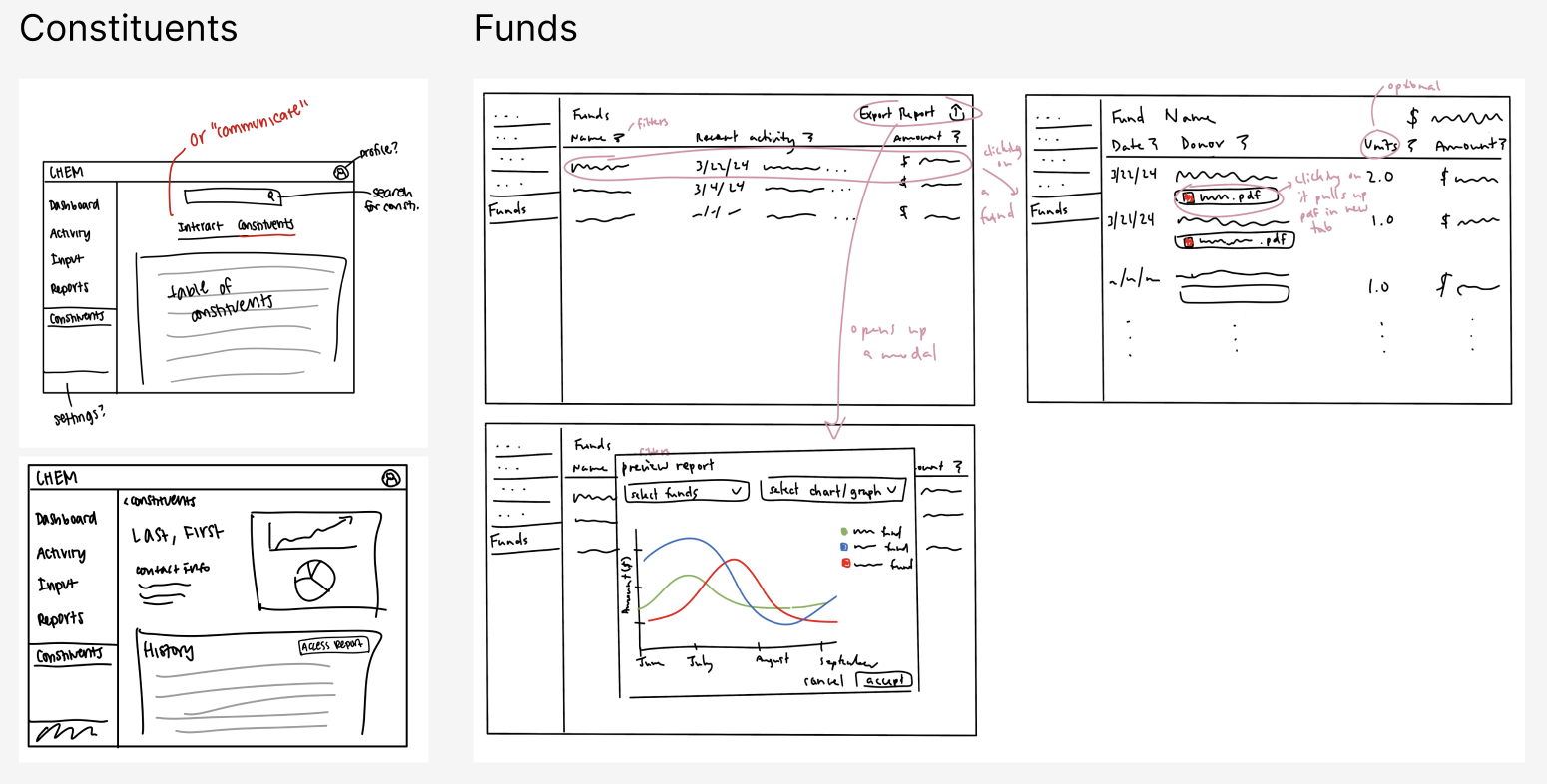
Constituents and Funds were sketched by my teammates Sonia and Ashlie. Constituents show the profile and activity of an individual constituent. Funds shows all available funds + detailed information about each fund.
EXPLORATIONS
At this point, I had taken over last semester’s mid fidelity designs into the new semester to finalize the project. However, before I did that, I realized that our old designs had many problems.
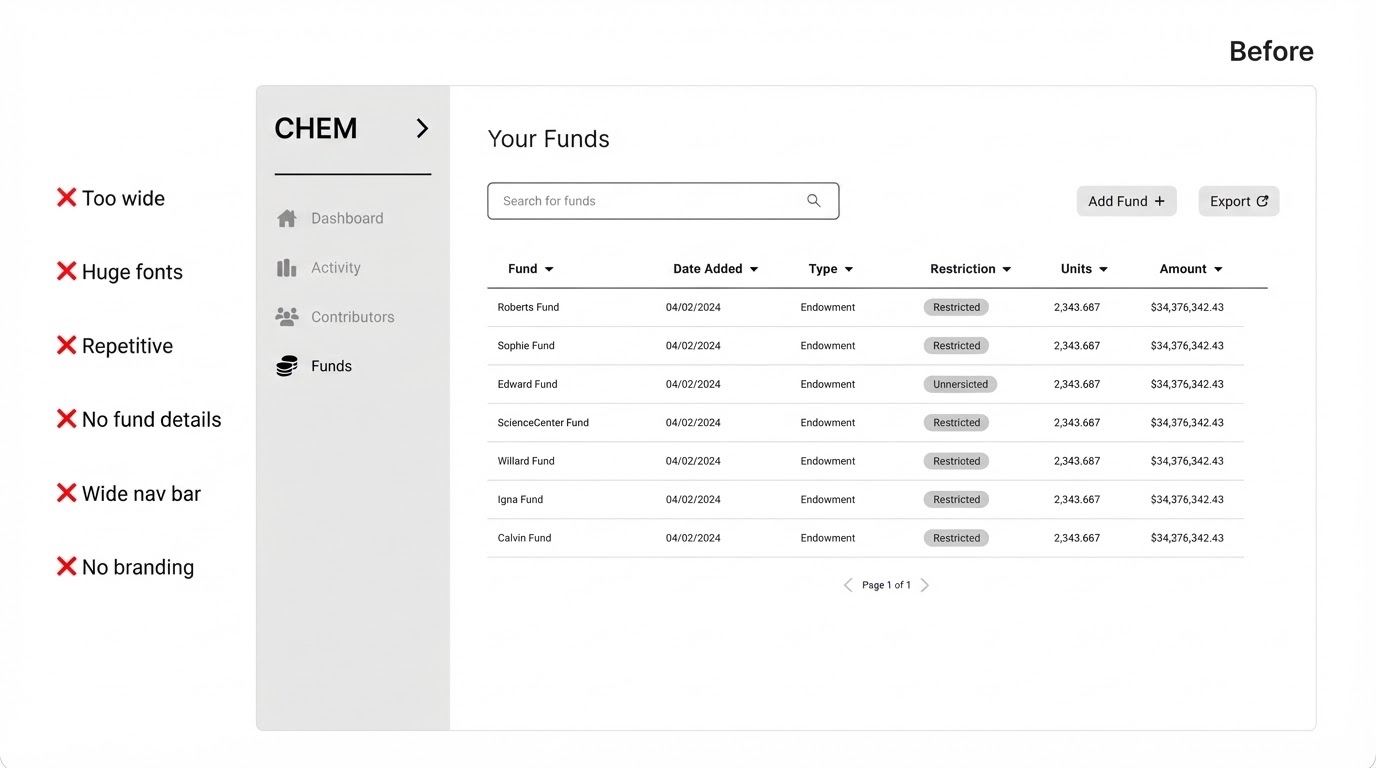
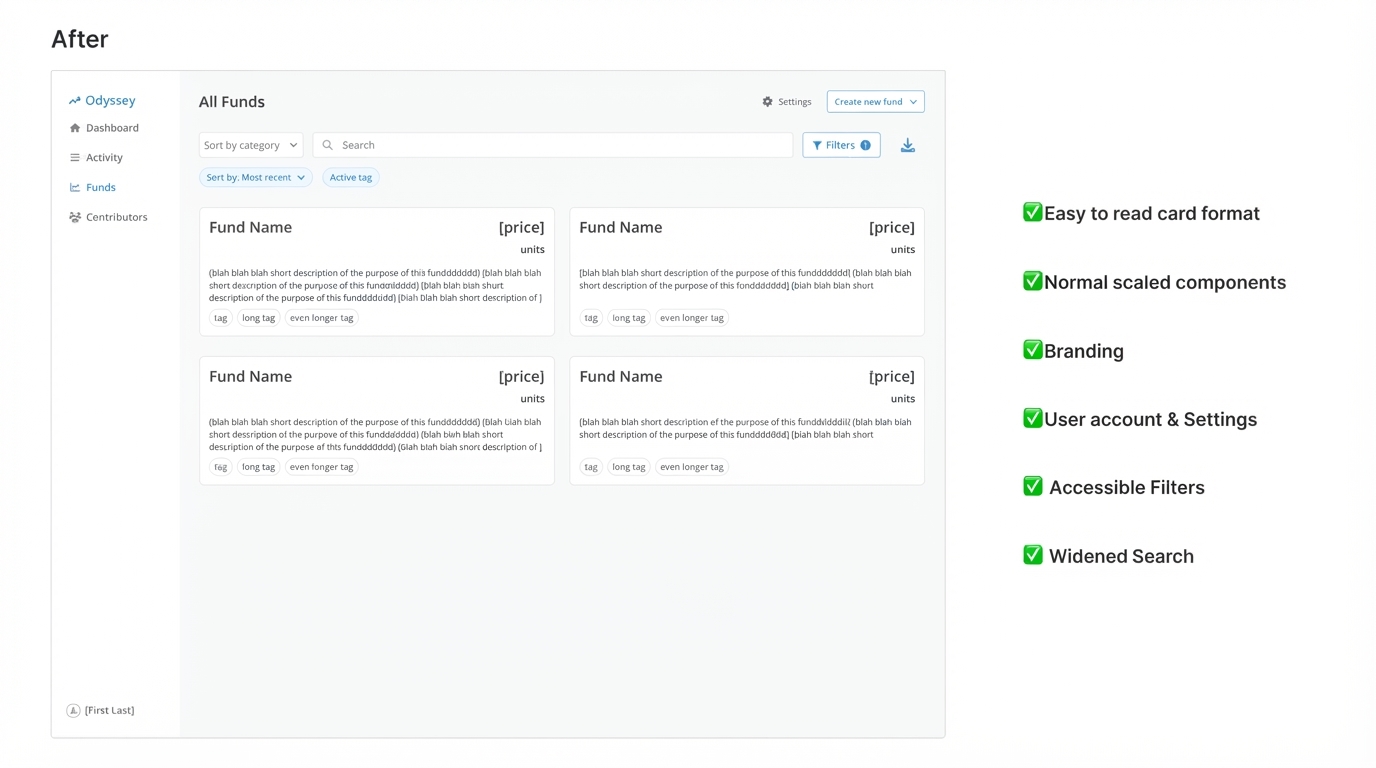
We needed to fix all of these errors before iterating on our prototypes. Leading to a completely new product...
 ITERATIONS
With the new design system in place, I iterated on a few different designs (with others not shown): Odyssey’s landing page, footer layout, flow for importing data tables, customization of tables, setting up an account, and flow for interacting with contributors.
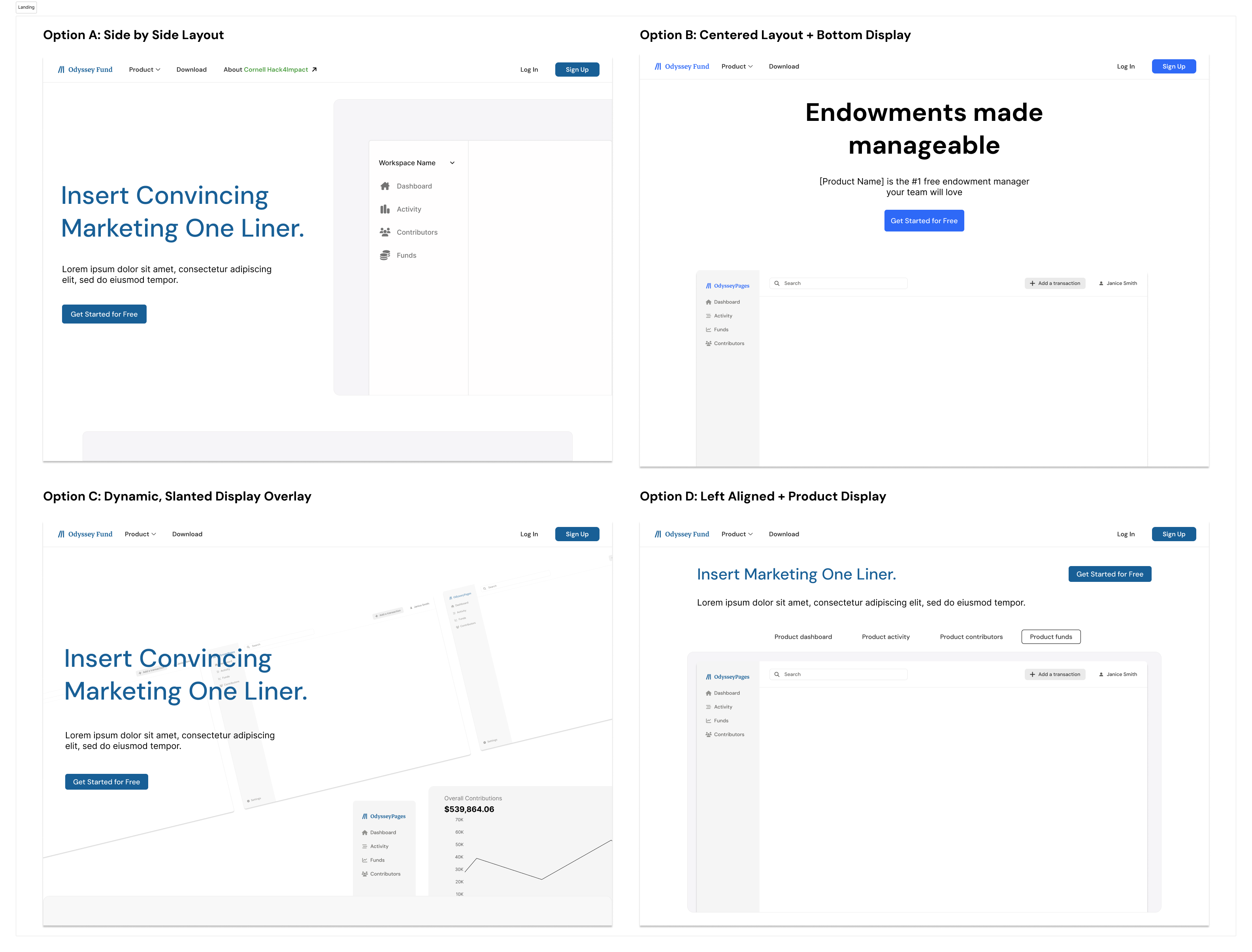
From the four options above, I ended up going with Option A for the final landing page since it’s easier for users to read from top left to bottom right and through feedback from users during three A/B Testing sessions where we compared the different options.
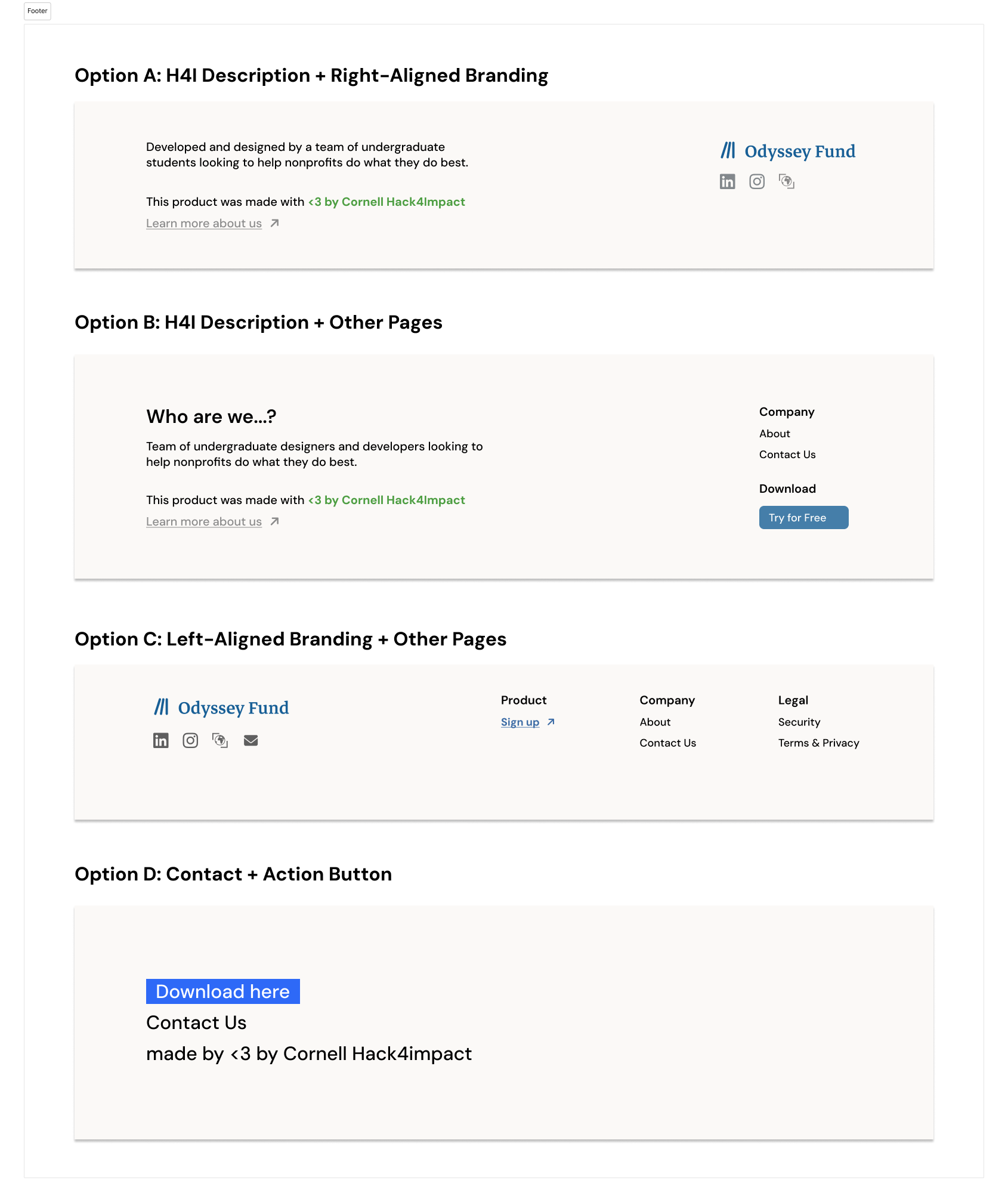
For the footer designs above, I focused on functionality and building trust with users to encourage them to open accounts. This was why I ended up choosing Option C for easy link navigations and added a separate section before the footer for Hack4Impact’s purpose.
FINAL DELIVERY
There were so many flows that I created, including data table customizations and adding a donor, but I included the most complete and updated flows here. Scroll to see each flow, from creating an account to sending an email to a donor.
TAKEAWAYS
Some next steps for Odyssey include adding high fidelity prototypes for smaller flows and updating our design system. With this being my longest design project ever, I have learned many lessons about dev-design collaboration and design thinking.

After affinity mapping the competitor research and user interviews, we found ourselves dealing with a lot of potential features. However, being limited by time and engineering constraints, we needed to prioritize the most important flows and rationally sacrifice certain reaches (such as donor grouping & data input).
Halfway through high fidelity, we were told that there can be multiple contributors and there is no restrictions for endowments. This was a shock! We had been under the assumption from previous data that funds were either restricted or unrestricted with singular contributors. This made us quickly update our designs within a short amount of time.
I really appreciate my team for giving me constructive criticism for every design and gaining first hand experience for my first client project! I am looking forward to seeing the future release of Odyssey Fund and the non-profits that it will impact.